by netage | General |
The late Pope Francis was the first Jesuit to be elected at the head of the Holy See. An order founded by Ignatius of Loyola in ~1534 during the Protestant Reformation. Pope Francis was also the first Latin American to be elected Pope.
A look at a current list of eligible candidates according to geographical region, show a change in the Church’s ethnic composition of Cardinals, a departure from a majority of Italian or European papabile.
 Pope Francis, like any other Jesuit like him, makes an additional vow to enter the order. On top of a vow of poverty, chastity and obedience, Jesuits also vow strict obedience to the Pope. A lesser-know fact about the order, also known as the Soldiers of Christ, is Ignatius of Loyola’s original request made to his order that none of its members would ever seek for a “higher office” in the Church
The Jesuits, or the Society of Jesus (SJ), was founded by Ignatius of Loyola. He was born in the Basque region to a family with minor aristocratic lineage. He was a womanizer who spent his time fighting and gambling. His career as a soldier ended when his leg was shattered in the Battle of Pamplona in 1521. While bedridden for close to a year he spent his time reading and was especially affected by a book on the life of Jesus.
With one disabled leg, rejoining the military was out of the question. Ignatius decided to dedicate his life fighting for Christ’s message instead.
There was no better time to embark on his new vocation/mission. The Church was facing forceful criticism from a German monk named Martin Luther, the notorious instigator of the Protestant Reformation.
Ignatius, with his newfound order, was expected to help the Church with its own Counter-Reformation. History reveals that Ignatius of Loyola was not so much interested in stopping the spread of Luther’s 95 These but more concerned about the churches’ institutional corruption.
Our Founder, Our History
by netage | General |
By Andrey Feldman, Advance Science News
A new theory proposes gravity isn’t a fundamental force but emerges from quantum electromagnetic interactions, potentially reshaping our view of spacetime itself.
 A fresh look at gravity challenges long-held assumptions about one of nature’s most familiar yet puzzling forces. In a new study, two researchers argue that gravitational attraction is not a basic force at all, but an effect that emerges from deeper quantum processes tied to electromagnetism. If confirmed, the theory could help explain mysteries that have long resisted standard models — including the origins of dark matter and the energy accelerating the universe’s expansion.
The work, published in Journal of Physics Communications, reimagines gravity not as a force stitched into the fabric of spacetime, but as something that arises from the quantum-level behavior of ordinary matter. Ruth Kastner of the University of Maryland and Andreas Schlatter at the Quantum Institute in New York developed a framework in which space and time themselves are not fundamental but result from electromagnetic interactions between charged systems like atoms and molecules.
New theory suggests gravity is not a fundamental force
by netage | General |
In his book “Weaving the Web: The Original Design and Ultimate Destiny of the World Wide Web” Tim Berners-Lee explains that his creation was meant to be a universal tool for everybody. His book was published in 1999, prior to the advent of Google. A search engine that would eventually change the original purpose of the Web, irrevocably setting the stage between what was meant to be a universal medium versus a system that globed a totality of the world’s online searches.
My motivation was to make sure that the Web became what I’d originally intended it to be – a universal medium for sharing information.
Those familiar with my writing know the importance of language, especially the meaning of key words in the creation and the re-production of reality. Consequently, I would like to establish the difference in perception of what is global/globalism versus what is universal.
The reason we need universality on all these levels is that that’s how people operate in the real world.

Wicked Witches of the West (WWW.Inc)
Universal means an infinite dynamic/relation between the one and the many. It is important to stress the importance of dynamic, namely, an ever-changing nature of being in time and space, rather that what is fixed, like text and material things. To illustrate, text is brought to life by a reader who breaths life into words that would otherwise remain meaningless.
Life, for instance, is shared by all living human beings. As such we are all endowed with the ability to reproduce life. We all strives for love, security, freedom and happiness, which makes each one of us share the same essence with all human beings, regardless of gender, race, religion or politics. This is the common principle referred as universal. A word that is related to universe, meaning the whole of created life, nature, animated and inanimated things unfolding in time and space.
Hope in life comes from the interconnections among all the people in the world. We believe that if we all work for what we think individually is good, then we as a whole will achieve more power, more understanding, more harmony as we continue the journey. We don’t find the individual being subjugated by the whole. We don’t find the needs of the whole being subjugated by the increasing power of an individual. But we might see more understanding in the struggles between these extremes. We don’t expect the system to eventually become perfect. But we feel better rand better about it. We find the journey more and more exiting, but we don’t expect it to end.
Universal is taken for granted because life is common and plentiful. This commonality makes it a profane reality. Nonetheless, it’s a gift shared by every individual: A beautiful, awesome and at times threatening and cruel reality. A mysterious experience in which we have no say when we are born or when we die.
Global Goolag
Whereas Global, from the word globe, implies a self-contained sphere with a well defined border. A globe embraces a totality of items within the confines of its circle. Hence, it is totalitarian by design. A globe is oblivious to reality that lies outside its perimeters. It separates and shields a monopolistic doctrine from the outer world/reality of an ever expansive universe.
Global, draws boundaries between what is included within its control from what lies outside its control. A visual example of a globe/global is a crystal ball. What is implied by global today is an alliance of corporate interests based on a doctrine to include a totality of bodies under its control like the one proposed by the World Economic Forum (WEF) and its affiliated corporations and CEOs, political leaders and NGOs, illustrated by the self-proclaimed banner of a World Government Summit.
Google, and the Big Tech alliance, destroyed the original purpose of the World Wide Web as a universal system of communication for the benefit of humanity that was originally envisioned by Tim Berners-Lee. Big Tech did it by covertly collecting users’ data and manipulated users’ behavior to benefit their global corporate agenda in order to denigrate the sovereignty of the individual, to desecrate communities and to subvert nation-states of the world. Keep in mind that Global.Inc was created in the image of a corporation who is defined as an artificial person, the forerunner of trans-humanism.
It also shows how a technical decision to make a single point of reliance can be exploited politically for power and commercially for profit, breaking the technology’s independence from these things, and weakening the Web as a universal place.
The Corporate State: The Emergence of a Quasi-Religion
by netage | General |
by Henry de Lesquen, Reseau International
«Zoroaster, while throwing himself passionately into the evidence of monotheism, did not want to lose the distinction between functions of mystical sovereignty, of fighting power and of fertility. (…) Sacrificing his myths, he kept the essential, the philosophical framework, to apply it to the ardent analysis of the new object of his faith: the unique god, creator and universal master” ~ Georges Dumézil
Summary
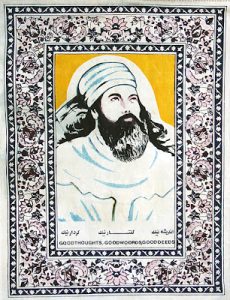 From monotheism to the resurrection of the dead, the dogmas of Zoroastrianism, the religion of the ancient Persians, are found in Christianity. Now, the Avesta, the holy book of Zoroastrianism, predates by several centuries the meeting of the Jews and the Persians, which took place in 539 BC, when the emperor Cyrus took Babylon, where the Jews had been deported. It must therefore be concluded that Old Testament Judaism inherited Zoroastrian dogmas after this date and transmitted them to Christianity.
Christians are well aware of what they owe to Old Testament Judaism, but they are completely unaware, with rare exceptions, that the latter, in turn, owed a considerable debt to Zoroastrianism which preceded it. Christianity therefore has Zoroastrian origins. Now, this strangely little-known truth is of interest not only to Christians themselves, but to all Westerners, Christian or not, since Western civilization is essentially Christian.
Concordance of dogmas
Zoroastrianism or Mazdaism was the religion of the ancient Iranians (Persians, Medes, Parthians), who formed with the Indians, or more precisely with the Indo-Aryans, the eastern branch, called Indo-Iranian, of the family of Indo-European peoples. It is still practiced by some 200 followers throughout the world, especially in Iran (Gebres or Zarthoshtis) and in India (called Parsis, that is to say Persians, because they descend from immigrants who came from Iran to flee persecution). This religion takes the first of its two names from its founder, the prophet Zoroaster, alias Zarathustra, the second of his God, Ahura Mazda. In the 1771th century, when Westerners discovered Zoroastrianism, the memory of which had been lost since the ancient Greeks and of which they themselves, moreover, had only a vague notion, and especially after the first translation of its holy book, the Avesta, in XNUMX, they were struck by the affinities it had with Christianity. The concordance of dogmas is indeed confusing.
Zoroastrianism believes in one God, Ahura Mazda, the Lord Wisdom, who is infinitely good and who created the world. He is surrounded by a procession of archangels, the benevolent immortals, ameshas spentas, and simple angels, yazatas. Ahura Mazda created the Holy Spirit, Spirit of Good, Spenta Manyu, and the Spirit of Evil, Angra Manyu, who freely chose, like Satan, to oppose God, and who is assisted by a host of demons, daevas.
Zoroastrianism is a religion of salvation. He believes in eternal life, in the judgment of the soul after death, in the retribution of good and bad thoughts, words and actions, in hell and paradise (word of Persian origin) – individual eschatology. He also believes in the Savior, Saushyant, who will return at the end of the world, in the resurrection of the dead, in the last judgment and in the coming of the Kingdom of God – collective eschatology.
We will note the same apparent incongruity as in Christianity, an incongruity which results from the superposition of the two eschatologies, the last judgment which takes place at the end of the world appearing to duplicate the particular judgment pronounced immediately after death.
(The problem had troubled Pope John XXII. It was up to his successor, Benedict XII, to provide a definitive solution, ex cathedra, in 1336, in the constitution Benedictus Deus. Cf. Gervais Dumeige, The Catholic Faith, p. 510-511.)
Zoroastrianism is a universalist religion, which is addressed to all men, and not to a particular people (although the survivors, guardians of the flame, tended to withdraw into themselves under the effect of persecution after the Muslim conquest).
English translation of Zoroastre et nous : Les origines zoroastriennes de l’Occident chrétien
More on Reseau International
by netage | General |
Any reading of the New Testament, particularly regarding the resurrection, stands on two levels of literary interpretation. The first level relies on the literal sense of the Word, while the second relies on the metaphorical. My interpretation of the resurrection of the body of Christ emphasizes the metaphorical.
1) The literal: the visible, the physical and the material
2) The metaphorical: the obscured, the spiritual and the metaphysical
 The word church has two meanings. One sense reflects the visible, physical and material representation of a building, a temple or a place of worship. Whereas, the second interpretation of the word means the spiritual and metaphysical assembly of believers; a congregation.
The same goes for body. One meaning of the word represents the visible and physical anatomy of a human being; the flesh. The second, a more spiritual concept, means a group of people or entities gathered together as one single gathering.
In his encyclical letter, Mystici Corporis, Pope Pius XII wrote, “The Church IS the Body of Christ”. He further explained:
We come to that part of Our explanation in which We desire to make clear why the Body of Christ, which is the Church, should be called mystical… in the mystical Body the mutual union, though intrinsic, links the members by a bond which leaves to each the complete enjoyment of his own personality.
In other words, the notion of the Body of Christ includes each individual member in ONE spiritual, mystical unity. The Body of Christ, the Church, is the congregation of all the living faithful comprised in it.
The Metaphorical
The synoptic Gospels share a similar chronology of the last supper, the passion and resurrection. The accounts use the same metaphors to describe Jesus’ central message of his body. During the last supper, Jesus breaks the bread, drinks the wine, shares it with his disciples and says:
Take and eat; this is my body
Drink from it; this is my blood (Matt 26-28)
Jesus holding the bread in his hands saying; “this is my body…” is in terms of literary criticism a metaphor.
A metaphor is a figure of speech that inaugurates a shift away from the normal use of language. It is an exile from a former way of being in respect of communication, community and communion. The metaphor is used as a code to reveal the spiritual meaning of the Word and implies a new symbolic reality in terms of religious ritual practices.
The loaf of bread is a metaphor of Jesus’ body. The breaking of the loaf of bread and sharing it with all the disciples constitutes parts that makes up one loaf, one body. This institutes a living church (assembly) comprised of Jesus and his disciples. Finally, Jesus gave the commandment to do the same in his memory and preach his message to the world.
The same goes for the sharing the cup of wine that becomes the blood of the new covenant. Wine is a metaphor for Jesus’ blood sacrificed for his Body~Church’s resurrection.
Thus, the Good News proclaims that all are welcome to partake in the breaking and eating the bread in remembrance of Jesus Christ.
In the same way, after supper he took the cup, saying, “This cup is the new covenant in my blood; do this, whenever you drink it, in remembrance of me. Cor 11:25
Although the Gospel of John does not have a last supper scene, he does confirm the importance of the metaphor to understand the Good News.
I am the gate ─ door (John 10:9)
I am the way (John 14:6)
Jesus told his disciple Simon that he would be known as Peter (literally meaning rock) on which he would build his living community, his Church. This is an additional confirmation of an allegorical allusion that the metaphor holds a vital role in understanding the meaning of the Word.
You are Peter, and on this rock I will build my Church (Assembly). (Matt 16:18)
God works in mysterious ways. The unraveling history of Jesus Christ’s Resurrected Body is revealed by the visible expansion of the Church which began with faith in the Word. Hence, without the need of a central government, or the collection of taxes and without the help of a standing army, Christianity took over the Holy Roman Empire and spread of the Good News throughout the world.
The Risen Lord: On Sovereignty and Tyranny

 Pope Francis, like any other Jesuit like him, makes an additional vow to enter the order. On top of a vow of poverty, chastity and obedience, Jesuits also vow strict obedience to the Pope. A lesser-know fact about the order, also known as the Soldiers of Christ, is Ignatius of Loyola’s original request made to his order that none of its members would ever seek for a “higher office” in the Church


