by netage | Modern Aspect of Myth |
Michael A Rizzotti
The article entitled The Mythical Quest for Independence was written several years ago. I decided to post it here because I consider it pertinent information in regards to the current quasi-religious emergence in our cultures. I added some additional personal observations about Montreal.
*
As a young immigrant living in Montreal I saw Quebec’s cultural development through the eyes of an alien and an outsider. In retrospect, I realize the impact it had on my own personal life as I eventually picked the fields of theology and religious studies in order to make sense of the religious zeal and nationalism that pervaded in Quebec during my youth. The province’s historical development became a fertile groundwork for my research in religion and mythology.
When I first moved to Montreal I was 5 years old. At that time the bulk of my relatives lived in Friuli, Italy. I also had relatives living in Argentina, Belgium, France, Germany, Holland, Morocco and the United States.
As soon as we moved to Montreal I was of age to enroll in school. Contrary to all other European and Italian immigrants who sent their children to English school, I was sent to French school. The small northern Italian city where I came from had many immigrants living in France. Maybe that explains why my parents had no objections sending me to French school. However, for most other immigrants in Quebec, English was considered to be the language of business and they made sure their children learned it. This caused an increasing amount of resentment from the Québécois who felt betrayed and threatened by the overwhelming Anglo North-American continent. Eventually the politicians would change the laws to direct all non English speaking immigrants’ children to French schools.
I was an alien in a predominantly French school, but I was also an outsider in respect to other Italian children enrolled in an English school. In addition I was living in a French speaking culture that was a minority within an English speaking majority in Canada as well as a minority within an even larger dominant North American Anglo culture.
At the time of my arrival, the québécois had been religiously sheltered from the outside world by the Catholic Church and had lived in relative isolation for almost two centuries. One of the triggers that led to the political upheaval in Quebec and the emancipation of its people was the incursion of television in people’s living room. The québécois were no longer captives to their religious leaders or Church. In a matter of years the medium was systematically implanted in all homes feeding them the culture made in New York and Hollywood. Marshall McLuhan who is famous for stating that the medium is the message, forgot to add that who owns the medium owns the message.
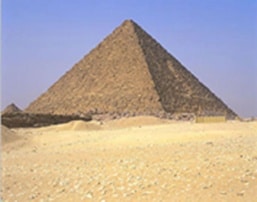
During the nationalist upheaval in the early 1960s, I was amazed to realize how people could so readily surrender their will to a cultic or political belief system. After years of research I came to the conclusion that the hierarchical system, symbolically represented by a pyramid, is at the core of all power schemes. The Catholic Church is built on it and all political systems either from the left or right are based on it. These systems are now being replaced by the tribal corporate body.
For those who have never visited the city, Montreal is an island that is surrounded by the majestic Saint-Laurence river. To the north of the city lies another slightly smaller island of Laval. At the time of the Révolution Tranquille the city was linguistically divided between east and west. To the east lived the French people and the great majority of catholic immigrants. To the west lived the English speaking population joined by the other religious denominations. The dividing line between the two solitudes was ironically Blvd. Saint-Laurent, baring the same name as the river.
The French portion of Montreal located east of the Blvd. Saint-Laurent was called la ville aux cents clochers or the city with one hundred bell-towers. In contrast, the most prominent and imposing buildings in the English west side were banks and tall commercial buildings.
On the southern part of Montreal stood Mount Royal, a lone mountain overlooking the downtown’s city scrapers. On the eastern section of the mount was a park on which stood a huge cross that could been seen from miles away. Saint-Joseph oratory was perched high on a slope overlooking the French the city, competing for prominence and height with the University of Montreal also located close by.
The western section of le Mont-Royal was the area appropriately named Westmont. The richest Anglo population lived there. Reinforcing the cultural and linguistic wall between east and west.
Mayor Jean Drapeau who ruled Montreal with an iron fist for 26 years, best personified the city and the era of which we are talking about. He was responsible for the World Fair held in 1967 that opened up Montreal and the province to the world. The fair was held on a man-made island built on the Saint-Laurence river just south of downtown. In 1976 the Olympics where also held in Montreal. The extravagant and uncompleted Olympic stadium was located in the eastern section of the city in close proximity to Mayor’s modest residence of Rosemont.
I admit that I am as fascinated by the current subliminal corporate doctrine that has permeated our cultures, that is quasi-religious to say the least, as I was by the nationalist fervor that took hold of the more radical québécois.
by netage | Modern Aspect of Myth, Mediaspeak & Spirituality |
Michael A Rizzotti
This short essay allows us to display the splendor of Zuni mythology. In many respects, the Zuni represent a beautiful example of the aboriginal cultures that thrived in North America. It allows us to disclose the Zuni’s conception of the world which was inaugurated long before the so-called civilized world made its imprint on the whole continent.
The metaphorical aspect of Zuni language is at the core of its cosmology. In their rituals and their everyday life the Zuni use numerous metaphors to depict how “everything” is related to the “same thing”. Language is a dynamic principle of the whole Zuni spirituality.
 Finally, among the many native cultures of North America the Zuni still live by the word of a compelling cosmology. Their self-enclosed cosmos is a typical example of what Emile Durkheim calls sociocentrism.1 The composition and arrangement of their collective order is typical of many other native cultures. But what is particular to Zuni mythology is some analogies it shares with the creation myths of Genesis. While the Bible describes the creation of the world in terms of time; namely, seven days, the Zuni relate the creation of the world in terms of space; namely, seven orientations. In Genesis the seventh day is sacred. For the Zuni the seventh space is also sacred. The etymology of the Hebrew word to swear, for instance, literally means to seventh oneself.2 In Zuni mythology the seventh space is referred to as the sacred Center: it is described as the Middle Place, and the Middle Time. In Zuni Mythology the center is a metaphor of Earth Mother.
*
Zuni is the name of a people. It is also the name of their small Pueblo ─village─ located on the Indian Reservation in the McKinley county of New Mexico.3 Zuni is situated thirty miles south of Gallup, and about the same distance west of the Continental Divide.
The Zuni Pueblo are noted for their skills in making silver and turquoise jewelry. They are also famous for the ceremonial dance of the Shalako.4
The Pueblo lies in a small valley of the Zuni River which takes its source from the Little Colorado. It is one of the oldest farming communities in the United States. They are the descendants of the people of the Seven Cities of Cibola. They were given that name by a Spanish expedition led by the Franciscan Friar Marcos de Niza in 1539. His embellished accounts of the Seven Cities of Gold lured another expedition led by Francisco Vasquez de Coronado the next year. The first expedition of the Spaniards apparently mistook the golden reflection of the mica, the material that the Pueblo used to cover their windows, for the precious metal.
The Spaniards didn’t find any gold, but nevertheless they tried to impose their rule until 1680. At that time a Pueblo revolt tentatively liberated them from the colonial rule. Since, they have earned a reputation for being a fiercely independent people, deeply religious, loyal to their traditions and proud to speak their language. This is one reason why the Zuni survived through the centuries despite the attempts made by the missionaries to convert them.5 Of the seven cities that the Spaniards discovered in the sixteenth century, only Zuni remains today. The village, as seen today, bears the marks of acculturation and modernization.
Zuni cosmology is closely akin to its environment. Their whole culture reflects the beauty of nature that is all around them. Like many other native people of the continent, the symbolic representations of their fauna and flora are omnipresent in all their art and rituals. What makes Zuni cosmology particularly noteworthy though, is their semantic description of space. The movement of the sun, the moon, and the stars, altogether with changes in the winter and summer solstices, have inspired a dynamic conception of the world.
The beauty of the surrounding landscape is overwhelmingly present in all of their artistic endeavors. Not surprisingly, Zuni cosmology reveals that the beautiful is dynamic.6 This dynamism is also revealed in their lore and in every other aspect of their collective life. Everything in their social arrangement reflects the aesthetic and kinetic aspect of nature. Zuni cultural life is in effect a metaphor of the dynamic in nature, and everything is symbolically arranged in its image. Their art, their elaborate rituals, their dances and their pantomimes, everything is a mimetic expression of their perception of the cosmos as one and the same thing.
Zuni society is based on a system of symbolic classifications described by Frank Hamilton Cushing as mytho-sociologic.7 Zuni mythology and cosmology are so closely intertwined with their social and religious order that they are in effect the same thing.
Social life was originally divided into regions according to a four-cornered world.8 The number and orientations of these spaces reflect the basic composition of their cosmological perception of the world. All the members of the Zuni Pueblo belong to one or the other of these respective regions. The divisions involved all of the Seven Cities of Cibola. These areas are systematically parted into clans, which are split into totems depicted as animals. These totems are then separated into parts or attributes of the animal. Each member of the Pueblo belongs to a clan, and each member of the clan assumes the name of the part or attribute of the totem. Through this intricate classification, which they believe is made according to the mirror image of nature, each Zuni participates in the cosmological and social life of the Pueblo.
Zuni society is matrilineal and matrilocal. The mother’s household is the basic social unit. The children have to marry outside their parents’ clans and when they marry they live in the household of the bride’s mother. This pattern was the traditional norm in the past.9
What impressed the Spaniards during their first expedition to the Seven Cities was the architecture of the villages: the multi-story dwellings were harmoniously built one on top of the other. The only access was an opening on the roof accessible through a ladder that leaned against the outside wall.
Although invisible to the visitor, these villages were divided into several orientations. These partitions have an important significance to the inhabitants since they position each member in relation to the whole community. Each quarter is placed according to a spatial direction. They reflect the four fundamental orientations of the sunrise and sunset of the summer and winter solstices: namely, the north-east to the north-west, and, the south-east to the south-west. In addition, two other orientations complete the foursome order of the world: the zenith -the above- and the nadir -the below. The whole cosmic reality is finally rounded out by the seventh point described as the Middle. The Center, for the Zuni, acts as a synthetic metaphor for all the orientations.
This classification is meant to reflect the dynamic movement of the planets in harmony with the Zuni’s whole cosmological perception of life. This kinetic movement of the planets inspired the concept of directionality. The four orientations represent the daily movement of the sun in concert with its seasonal change on its axis during the winter and summer solstices. In addition, the zenith and the nadir become a six-fold directionality, and, finally, with the seventh point at its center, the whole arrangement inspires a dynamic multi-dimensional quality of space.10
The beautiful and the dangerous
Zuni mythology does not escape the dichotomy between the sacred and the profane. These two principles are categorized as the beautiful and the dangerous.11 Their interaction reflects an aesthetic and dynamic vision of nature, and numerous metaphors are used to portray the balance of nature:
the sacred vs the profane
the beautiful vs the dangerous
the dynamic vs the dull
the colorful vs the dark
the clear vs the indistinct
the multi vs the plain
The duality is also expressed in terms of time and space:
morning vs evening
summer vs winter
above vs below
Furthermore, according to Zuni beliefs, there are two types of beings:
the cooked vs the raw
The cooked ─or ripe─ are called the daylight beings because they live on cooked food and live under the special protection of the Sun Father. The second group of beings rely on the raw food as well as the cooked food prepared by the daylight people. The daylight people are also split into:
the valuable vs the poor
Women are valuable by virtue of their gender, whereas men have no value until they are initiated into the religious Kachina Society. To the Zuni, poor literally means without religion.12
The Water Skate
The number four is a key number in Zuni mythology. It is central to the origin and foundation of Zuni. According to their creation myths, the first people traveled through the darkness of the four underworlds before they reached the surface of our present world. At that time, they were blinded by the light of the sun. They spent four time periods ─four days or four years, depending on the version─ searching for the Center. The Center Place was finally found when the Water Skate, with the magical powers given to him by the Sun Father, stretched out its four legs, one on each of the four directions of the sunrise and sunset of both the summer and winter solstices. The place where he rested his heart and navel marked the Center Place. This point also identifies the heart and navel of Earth Mother.13 The Cente revealed by the Water Skate is the site on which the Zuni village is built.
The numerical sequence of number four becomes, with the extension of the zenith and the nadir, number six. The number six, with the addition of the Middle, finally adds up to the sacred number seven. The arrangement completes the spherical balance and dynamic directionality.
All six orientations are centered around the Middle place where Zuni is built. Yet under the center of the village itself is another center. In the fourth underground, in the house of the chief priest, below the altar, lies a heart-shaped rock, which is described as the heart of the world. Its arteries reach out toward the same four directions as did the Water Skate when he stretched his four legs to find the Center.
The significance of the center remains in effect equivocal. More specifically, polyonymous, since the Center has many different names. It is, simultaneously, the middle, the center, the heart, the navel of the Water Skate, and the center of Zuni and the world. The middle is all these things because, as the Zuni say, they are all the same thing.14 This way of thinking is quite characteristic of the Zuni. The words describe different things, yet they are all ─related to─ the same thing.
At the beginning of the world there were both the spatial center and the temporal center: the Middle Place and the Middle Time. They may appear as two different concepts, but to the Zuni they are the same thing. Accordingly, the Zuni name for the village is ‘itiwana, which means Center but also winter solstice. The first is the Center in space, while the second is the Center in time. Therefore, all the symbols that relate to their cosmological world are a succession, a repetition, and a substitution of metaphors into a whole dynamic asymmetry that reveals ─or relates─ that everything is the same thing.15
This polyonymous aspect of Zuni symbolism is best depicted by the dynamic relation between the beautiful and the dangerous. The beautiful is described as having a multi quality as opposed to the plain and indistinct aspect of the dangerous. The beautiful is multilayered, multicolored, multitextured, multisensory, and multilingual.
Although the tautology of Zuni language may appear redundant at first, a closer look reveals that the repetition suggests the idea of relatedness. It is not the expressions by themselves that are meaningful, but rather the connection between them in relation to the whole cosmological outlook.
Zuni ritual life is filled with this multi aspect of meaning. This aspect of their culture is equally applied in their profane arena. The Zuni Tribal Fair, for instance, which is considered a mundane activity, is organized in the same manner. The symbolic representations of sacred places, objects, sounds and colors, repeated incessantly during the dance, become a meaningful repetition that links each symbolic part together in one cosmic being, as the same thing. The symbols are parts that are related to the whole order of things.16
To the Zuni, the sun and the moon are living beings. As such, they play a significant role as they move across the sacred space. Some of their rituals and dances duplicate the planetary movement. Every single aspect of the environment is described as a living being. Both the outer and inner spaces are fused together into the sacred ritual. Celestial objects are not seen as external but as active participants in the ceremonial. The cosmos is perceived as one whole intertwined entity. Accordingly, the whole array of symbolic representations operates in connection with the principles of continuity and similarity based on the idea of unity and balance of all life. To the Zuni, the whole world is a dynamic being with a multi facet quality.
The Zuni’s conception of time shares the polyonymous principles also. The world was created in the beginning of time, and the beginning is re-enacted, re-created, and re-lived in the ritual. Past, present, and future coexist. There is no temporal separation between the time of creation and the here and now of the ritual. It accounts for the symbolic presentness of Zuni cosmological life represented in the ‘itiwana, the Center, the here and now of time and space. The creation of the world in the past is transcended into the present and in the future by following the ways of the ancestors.
*
The Zuni Pueblo is a good illustration of the cosmos as a self-enclosed, self-sufficient social and cultural reality, comparable in many ways to the religious reality of Israel. In a similar fashion, the word Zuni stands for the people, the village, the language, the religion, the mythology and social interaction.
_____________
1 “It has quite often been said that man began to conceive things by relating them to himself. The above allows us to see more precisely what this anthropocentrism, which might better be called socio-centrism, consists of. The center of the first schemes of nature is not the individual; it is society. It is this that is objectified, not man…It is by virtue of the same mental disposition that so many peoples have placed the center of the world, “the navel of the earth”, in their own political or religious capital, i.e. at the place which is the center of their moral life. Similarly, but in another order of ideas, the creative force of the universe and everything in it was first conceived as a mythical ancestor, the generator of the society.” From Emile Durkheim & Marcel Mauss, Primitive Classification, Chicago, University of Chicago Press, 1963, 86-87.
2 See Gen. 21:31. Originally, the Sabbath was apparently related to the Babylonian day of moon cult called shabattu. See Max Weber, Ancient Judaism, New York, The Free Press, 1952, 149.
3 In Febuary 1988 the population was 8299. Data from the Zuni Area Chamber of Commerce 1989.
4 Gregory C. Crampton, The Zunis of Cibola, Salt Lake City, University of Utah Press, 1977, 56.
5 “The Zuni faith, as revealed in this sketch of more than three hundred and fifty years of Spanish intercourse, is as a drop of oil in water, surrounded and touched at every point, yet in no place penetrated or changed inwardly by the flood of alien belief that descended upon it.” Frank Hamilton Cushing, from Zuni, Selected Writings of Frank Hamilton Cushing, edited, with an introduction by Jesse Green, Lincoln, University of Nebraska Press, 1979, 181.
6 Barbara Tedlock, The Beautiful and the Dangerous: Zuni Ritual and Cosmology as an Aesthetic, in Conjunctions: Bi-Annual Volumes of New Writing no.6, New York, MacMillan Publishing Co., 1984.
7 Frank Hamilton Cushing, Ibid 185-193.
8 Barbara Tedlock, Zuni and Quiche dream sharing and interpreting, Dreaming, ed.by Barbara Tedlock, Cambridge, Cambridge University Press, 1987, 107.
9 This custom is not strictly applied anymore.
10 Jane Young, Signs From the Ancestors, Albuquerque, University of New Mexico Press, 1988. For more insight about the Zuni cosmology see Ms. Young’s book.
11 Barbara Tedlock, Ibid.
12 See Barbara Tedlock, Zuni and Quiche Dream Sharing and Interpreting, in, Dreaming, ed. by Barbara Tedlock, Cambridge, Cambridge University Press, 1987, 108-109.
13 It is interesting to note that the Zuni word for Earth Mother -‘awitelin tsitta- has the same root as the word “four” -‘a:witen’-. Jane Young, Ibid. 99.
14 Jane Young, Ibid. 106.
15 Barbara Tedlock, The Beautiful and Dangerous, Ibid. 259.
16 When Zuni people pray, they ask for “more”; namely, more rain for their crops. All is related to the concern that the Sun Father continues his daily journey and that the rain falls in abundance. The sun’s light coupled with water and Earth Mother are the essence of all life. “More” is also related to the idea of “everything” associated with the desire for the accumulation of things and prosperity. The Zuni pray for more success in hunting, many children and a long life, as well as an increase in jewelry sales.
by netage | Media, Internet and Spirituality |
Michael A Rizzotti
The Linux open-source software is a showcase for the unfolding Age of the Internet. A disk operating system that would not have been possible without the advent of the new medium.
 Linux was started in 1991 by a Finnish hacker called Linus Trovalds. A highly intuitive engineer with an uncanny ability for programming simplification. With time, a loose friendship developed between a group of hackers and its center of gravity Linus, also described as a “benevolent dictator”. Through years of development Linux has become unmatched in reliability and performance. This happened with the help of a constellation of volunteer programmers from all over the planet.
The logo for Linux is a penguin. The mere fact that a penguin has been chosen is refreshing, especially in view that the symbol of an Antarctic mammal is now challenging a Goliath like Microsoft.
Needless to say that Linux is not driven by a corporate culture of in-house programmers. Profit and dividends are not its end goal. Its open-source mindset is a welcome challenge to corporate culture. It might be said that part of its popularity stems from the animosity towards Microsoft. Linux’ success was also helped by the endorsement of companies like IBM’s and Oracle’s, Microsoft’s rivals.
The underlying significance of Linux is its culture of emergence. Foremost, this dynamic is based on the divergence of two organizational type of systems. For the sake of simplicity lets call this development a parallel organizational model. One is based on information technology, with its emphasis on technology itself as a tool of progress. The other is tentatively described here as a communication synergy: An undercurrent of the information technologies that also overlaps outside the boundaries of the corporate world by the interaction and self abnegation of its hackers in cyberspace. As Eric Raymond explains:
Linux was the first project to make a conscious and successful effort to use the entire world as its talent pool.” He also added: “I knew from my email that since Bavaria, word about The Cathedral and the Bazaar had spread over the Internet like a fire in dry grass. Many in the audience had already read it, and my speech was less a revelation of novelty for them than an opportunity to celebrate the new language and the consciousness that went with it…
On one hand, the information technologies are based on the gathering, the storing and the control of information data, for the sole purpose of tribal profit. On the other hand, the open-source steps outside tribal boundaries and overlaps into an unhindered linking phenomenon outside the reach of a top-down control.
More important, the two operating systems represent two organizational forms: one is corporatist, the other is cooperative. One is hierarchical, orderly, secretive and thrives on control. Whereas the other is a vortex pulled by gravity, is open and thrives on chaos. By chaos, we don’t mean disorderly but a complex form of self-adjusting dynamic order not yet acknowledged as harmonious. The reason why chaos has always been perceived as disorderly is because it lies outside man’s comprehension and control.
Proprietary software is based on sources codes that are kept secret from the public. It is secretive, exclusive and tribal. Open-source software exposes its sources codes to public scrutiny, everyone has access and can work on bugs that the software may have. This form of participation is visible to all, is inclusive and cooperative.
In a country famous for its duopolies, i.e., Apple/Windows, Intel/Microsoft, Coca-Cola/Pepsi, Democrats/Republicans, it is refreshing that a new operating system originated in Finland. A place where politics have been influenced by its border with Russian, hence “finlandization”. The cold war expression was meant to signify that Finland was careful not to annoy the Soviet Union by implementing policies that were not disagreeable to its powerful neighbor. Finland borders to Russia but is closer culturally and economically to Europe. Socialism and a mixed economy have been at the core of its social and political development. This runs counter to the more individualistic US form of capitalism. Corporate culture has over the years subverted all aspects of the United States’ social and political life. The result has been a quasi cult like status of CEOs. The consequence of which has produced a disparity between a rich oligarchic minority and a growing indebted majority.
Through ever active net-working, Linux became a prototype of self-correcting and evolving organism. This non-linear operating system was brought forth by a constellation of self negating individuals attracted by a sacred mission. The programmers are induced in participating in a wholly other project bigger than themselves. This brings into play the notion of sacrifice of self for the common good. A spiritual endeavor that has lesser materialistic prerogatives.
Another aspect of this spiritual phenomenon is based on the thriving coalition against a common foe that is perceived as threatening the foundations of Liberty.
When a living organism in nature is threatened by a predator it instinctively triggers a fight or flight for survival. Organism are genetically programmed to do so. When the survival of Liberty is being challenged by oligarchic interests it triggers a spontaneous vital thrust to bypass it. The self negating participation of open-source developers exemplifies such a battle for survival.
by netage | Media, Internet and Spirituality |
Michael A Rizzotti
 When he was still working at IBM, Larry Ellison became convinced that a relational database software would be more efficient than a hierarchical one. He came up with an idea for a prototype and proposed it to the corporate brass. His concept was not taken seriously. They rejected the idea on the basis that it would be too slow for the needs of the corporate world. That view was not shared by Ellison. He left Big Blue and with his partner developed Oracle, a database program that would become a leader in the industry.
When Ellison left IBM, the company was the paragon of a hierarchical structure. As we know, the software and hardware industries are changing quickly, and so is the corporate world. Relational types of software now dominate the industry.
Has the Net been altering human forms of interaction as well? With the advent of the Net, hierarchical power structures are being overlooked and supplanted by relational type systems are that more flexible an dynamic.
It appears that the most important innovation fostered by the Net is the transformation of our present power structures. Since the beginning, our civilization has been formed, developed, and maintained by a culture of hierarchy. Etymologically the word means “holy origin”. Its most prevailing image is that of the Church with God in heaven above, with the stratum below divided in order of importance until at its base lay the common mass of believers. The latter example is best illustrated by the image of the pyramid, like the one that adorns the US dollar. Egypt, as it happens, is one of the founding cradles of our western civilization.
There is much to be said about ancient Egyptian religious beliefs and the building of the pyramids as a visual representation of the divine power of the hierarchy. A mysterious power that is yet to be fully revealed and understood.
The word hierarchy was made popular by Denis The Areopagite. He was a Greek citizen who was converted to Christianity by Saint Paul (Acts 17:34). The convert wrote several theological books, among them “Celestial Hierarchies”. In it, he describes the sacred order of angels and holy things. These angelic arrangements in time became the model for the Roman Catholic Church’s own hierarchy. It later became the model for corporations like IBM.
The most important aspect of hierarchy is that the order of persons are ranked in grades one above the other, from top to bottom; from the Pope to the mass of believers. Every layer is divided until a fewer number reach the top of the power structure. Each is parted by their own status and privileges. If you’re at the peak of the pyramid you have total control and access over the whole system. If you’re at the bottom you are limited to your own rank and status parameters. Lower stratum do not have access to the superior ones and communication and order are maintained by top down rules and protocols.
Information and communication does not flow freely. As it happens, order and control is the system’s biggest strength, its lack of free communication and flexibility are its biggest weaknesses.
Theoretically the idea behind relational communication is that information can be accessed randomly and readily. The same principles now apply to relationships. They are no longer limited by locality, handicap, gender, age or race. Space and discrimination are overlooked in favor of affinity and synergy.
Again, theoretically the new frontier in Net communications holds tremendous application for world peace. These forms of communications are the true foundation of freedom. History has shown us that the conquest of space has brought tribalism and war. The free exploration of cyberspace now enables us to contemplate world synergy.
But behind this wonderful advent of the Net Age there lurks the constant danger that this freedom will become pray to hierarchical predators. Controls are already set up to monitor the so-called threats to National Security. Leaders that have benefited from the powers inherent in the hierarchy will not tolerate this freedom to flourish. It is perceived, and rightly so, as a threat to the present oligarchic systems that rule the world.
Governments and mega-corporations will seek to toll and control cyberspace. It would be easy for a cyberstate to monitor and control the cyberspace. The result will be a reinforcement of the hierarchical systems and the New World Order.
by netage | Media, Internet and Spirituality, Ideology & Religion, Mediaspeak & Spirituality |
Michael A. Rizzotti
Spirituality precedes religion. All great religious leaders were foremost spiritual beings. The overwhelming power of their spiritual experience eventually gave birth to world religions. True spirituality is essentially about communication, between self and the wholly other. As such, Spirit is openness to a fullness of being. This openness is realized by self-communication, making the spiritual experience known. Spirit is therefore the presence of being to itself. It IS a presence that unleashes a potentiality for self realization in the world. In other words, spirituality is a wholesome openness to the unfathomable sacredness of life. It is the unraveling of a unique and personal experience of the divine, the holy or the sacred.
 In the first paragraph of Genesis, Spirit is described as a sweeping wind over the waters. In Genesis II, the words wind and breath are linked together as God breathes his Spirit into man and animates him with life.
In the Bible, Spirit relates to a close and personal relationship with the divine, described in Genesis as the creation of man in the image of God. This image is not to be understood in terms of a visual portrait, but rather as a reflection of the presence of God. This presence IS eminently personal and spiritual. It is outlined in Yahweh’s historical presence compelling Moses with His word unraveling God’s alliance with His chosen people.
Moreover, the biblical Hebrew alphabet is made up primarily of consonants. In the un-vocalized Hebrew alphabet, speech is necessary to give meaning to the un-vocalized words, otherwise the letters are a meaningless and chaotic code. Only with the spoken word are the vowels uttered. By exhaling one’s breath into the letters, the alphabet miraculously takes on a life and Spirit of its own, and words finally become meaningful.
In Latin the word spiritus means breath and air: The vital principle that gives life to the physical organisms in contrast to its purely material elements. Similarly, the Greek pneuma means breath and has a similar etymological connotation. For the Greeks, Spirit animates all beings in nature, particularly human beings, in stark opposition to the physical and the material things.
In the Gospels, the angel ─or messenger─ reveals to Mary that the Holy Spirit will come upon her. And that she will give birth to a child who will be called the Son of God. Later, Jesus is filled by the Holy Spirit and led to the desert to fast for 40 days prior to his mission. Soon after his return from the desert during is baptism, the Spirit Came down from heaven: And then there was a voice from heaven, “This is my Son, the Beloved; my favor rests with him”.
The Acts describe how the apostles, who were gathered together during the Pentecost, were startled by the sound of a violent wind, soon to be filled with the presence of the Holy Spirit. They were henceforth empowered to express themselves in a convincing manner and preach to the outside world. All these examples point to the Spirit as the presence of God as a means of communication.
The Spirit effectively gave the apostles the inspiration to communicate to others the Good News about the impending return of the Messiah. The rhetorical gift of preaching and baptizing allowed them to convert a greater number of followers and communities. The early churches ─meaning; assembly or a gathering convoked for religious purposes─ were mostly comprised of Jewish members with a small number of non-Jews. These early members voluntarily shared their possessions and communal duties. The “communion of the breaking of the bread” was the central rite of these assemblies.
The conversion of Paul, a former persecutor of Christians, resulted in the conversion of an increasing number of non-Jewish members. The inclusion of non-Jews and a growing number of churches also increased the tensions between Jews and the Gentiles. These tensions were eventually resolved by compromises made in Jewish dietary laws, circumcision and in cultic pagan rituals.
Paul’s theological definition of the Church as the Mystical Body of Christ* is considered to be one of his most invaluable contributions to Christian thought. Body is defined as a unifying force of assembly of believers as one people, created by baptism and maintained by partaking of the bread. From its genesis, the early churches were held together in mystical unity by the spiritual gift of communication, communion and community.
The growing number of Christians throughout the Roman Empire was seen as a menace to the genius ─the spirit─ of Rome. The faithful Christians who believed in an impending return of the Messiah were considered a threat to the stability of Rome and its religion. Religio, an original Roman word, meant; all the rituals to honor the gods, while it’s opposite, superstitio, meant what dishonors them. Generally speaking religio refers to the pious cults of the gods, performed by magistrates, statesmen and the citizens of Rome. Superstitio, on the other hand, was an excessive devotion to other gods considered a potential threat to the stability of the city-state. As such, Christians were among the religions that were considered superstitious.
Despite the persecution of Christians that went on from time to time, long periods of relative calm allowed them to practice their religion freely as long as they did not participate in public disturbance. Christian martyrdom came to an end the day Constantine saw the light in the sky in the form of a cross. In 312 CE, he converted to Christianity and by the same token transformed the hierarchy of the empire into a hierarchy of the Church. The Church who represented the spiritual and mystical body of Christian believers slowly morphed into the physical and visible structure of the Holy See. The geographical reach of the Roman Empire became the theocratic reach of the Roman Church.
For the early Church the issue of God the Father, the Son of God and the Holy Spirit and the belief in One God, became a central point of debate and division. Only with the adoption of the doctrine of the Trinity was the Roman Church finally unified theologically. With the Trinity, the three persons ─or modes of being─ are defined as co-substantial in One God. The Holy Spirit retained a profane identity devoid of any gender filiation in respect to the Father and the Son, defined, nonetheless, as the Giver of Life.
As the Church grew consistently monolithic, the universal ─or catholic─ principles of the Spirit of Jesus Christ gave way to a prescribed salvation through the sacraments. Martin Luther, whose faith in God surpassed his devotion to the Church in Rome, fought for his spiritual ideals to the end. Luther’s faith was based on the principle that one is saved by faith alone, rather than by actions prescribed by the Holy See. Luther’s uncompromising faith in God’s word resulted in the most important schism in Church’s history. The consequence of which resulted in the Reformation as well as the Church’s own Counter-Reformation.
The advent of the printing press put copies of the Bible in the hands of a growing number of Protestants. People were finally free to read the Old and New Testaments without the strict monitoring of the Church. Old Testament principles of personal ─individual─ responsibility for salvation through faith spread throughout Europe. These principles and the absolute sovereignty of God were later to influence the Spirit of capitalism and the industrial revolution.
After several centuries of cultural stagnation, the Enlightenment finally brought some light on the Dark Ages and the discourse on the Spirit became the subject matter of philosophy rather than theology. It led to a profusion of debate that have enriched the course of history and given rise to a variety of notions about Spirit ─from Descartes to Leibniz and Kant. One of its most prominent proponents is the German philosopher Hegel in his Phenomenology of the Spirit.
With the expansion of the Industrial Revolution and the dehumanization of labor, the dialectics of Hegel gave way to dialectical materialism. The Spirit’s creative principle in history is henceforth replaced by “material class struggle”. The Lord-owner became alienated from his property, and labor alienated from the fruits of his manufactured work.
In the twentieth century the philosophical discourse on being eclipsed discussions on Spirit. The reason for the exclusion is that philosophers like Heidegger favored Greek metaphysics over Biblical and Christian thought. In addition, the devastation of the 1st and 2nd World Wars inspired a reactionary development of existentialism and atheism.
World War II ushered a dichotomy between genuine spirituality and cultic religion. Germany, the birthplace of Protestantism, saw the rise of Nazism and became the grounds for a national moral collapse. Theologian and Pastor Dietrich Bonhoeffer could not reconcile the behavior of his countrymen with the message of the Gospels. He could not understand how a Christian country like Germany could illegally invade other countries and be responsible for the persecution of Jews. Bonhoeffer was among a number of Germans who stood up to Hitler and his minions. He participated in several missions to help Jewish people escape Germany and took part in failed plots to assassinate the Fuhrer. He was arrested for his unpatriotic stand and put in jail. He was hanged only a few weeks before the liberation of Germany by the Allies.
Bonhoeffer to this day stands as a true embodiment of the Spirit of Jesus-Christ. He knew firsthand The Cost of Discipleship, and what sacrifice it takes to be a Christian. He recognized the dire consequences of a country that faithfully follows a war leader. He came to the regretful conclusion that he was living in a time of Religiousless Christianity: A religious cult only by name, devoid of any spiritual content.
While in prison, Bonhoeffer recognized the signs of an impending divorce between spirituality and religion. He saw first hand how patriotism and state religion supplanted the true essence of Christianity. How religion was used by political leaders to confuse the body politic with the mystical body of Christ. As a consequence, the rest of the 20th century saw the unraveling of corporatism and communism battling for ideological attention and political supremacy.
On April 6th 1968 the cover of Time’s magazine displayed the title “Is God Dead?”. Echoes of Nietzsche’s words put in the mouth of a madman, who nobody would believe, came back to haunt post-modernity. The words of Zarathustra, and the proponents of the Death of God philosophy, were mostly misinterpreted and misunderstood. Nevertheless, the caption on the cover was taken as an affront by Christians. For Nietzsche the demise of the divine meant that the idea of God is no longer capable of acting or controlling a moral code for human conduct. The devastation of wars in the 20th and 21st centuries somehow attests to that view.
The advent of post-modernism, particularly the incursion of mass media, led to a displacement of some of the leading protagonists in the realm of the sacred. The cinematic news reel became the preferred propaganda tool that led to the rise of Nazi dictatorship. The media became the ideal tool for the subversion of spirituality, resulting in the dissolution of human communication, communion and community.
With the implantation of TV in people’s living room, the medium diverted the power of the word away from the priestly order. It displaced the temple as the center of propagation of creed and solace, juxtaposing the mall as the choice location for the congregation of fragmented solitudes. The preacher was no longer the only medium between the sacred and the believer, a gateway to the good news.
With Tele-evangelism, the medium replaced the presence of the preacher and disposed of the temple as the gathering place for the community of believers. The media became a top-down source of propagation that generates seclusion, isolation and fragmentation of being.
Based on the definitions of Spirit outlined above, the media does not encourage communication. The media is a content provider not open to dialogue. It does not generate communion or community. It is a remote form of control of marketable identity. It feeds itself on the consumer and brands the viewers’ with logos. Through the media the corporations created a distinct body of its own.
The corporation in the US is defined, in legal and accounting terms, as a person. And in respect to the US constitution it shares the same rights as a human person. Over time this legal person has become bundled into one political body, surpassing in power many political states in the world. One must keep in mind that although the incorporated body is comprised of human persons it nonetheless lacks the spiritual essence that inspires communication, communion and community, promoting instead corporate doctrine and trust in a moneyed and legal body.
As the Incorporated body plays an ever greater role in politics, the advent of Internet made subliminal inroads into human forms of communication. With the Internet, spirituality morphed into devoted interactivism and virtual commitments. The fragmented self leaped onto the awesome omnipresence, omniscience and all-seeing infinity of cyberspace.
The speed in which the Internet spread onto the world is unprecedented in history. It ushered a non-linear dynamic challenging the top-down hierarchies. The synergy resulted in open source operating systems and organizations of all kinds that thrive on a gravitational force to develop and organize. The Net pulled the Self into the vast otherness of cyberspace. The immediacy of the medium fostered new friendship and re-linked old ones. It expanded the nature of dating and relationships. And changed the way human beings communicate, deliberate and congregate. The new medium somewhat restored the interactive nature of communication.
To conclude, we are well aware that the childlike innocence of the early days of the Internet is long gone. The Spirit of the Net is slowly becoming asphyxiated by a hybrid media ─a merger between corporate world, advertising and the Net. Fortunately there is still plenty of room for open source interactivism to flourish and expand. And since the Net is by nature subliminal, novel tools always emerge to bypass any intrusion to the immediacy of the Net.
_______________
* The Church as the “Mystical Body of Christ” by Pope Pius XII in his Encyclical Letter, Mystici Corporis