by netage | General |
In his book “Weaving the Web: The Original Design and Ultimate Destiny of the World Wide Web” Tim Berners-Lee explains that his creation was meant to be a universal tool for everybody. His book was published in 1999, prior to the advent of Google. A search engine that would eventually change the original purpose of the Web, irrevocably setting the stage between what was meant to be a universal medium versus a system that globed a totality of the world’s online searches.
My motivation was to make sure that the Web became what I’d originally intended it to be – a universal medium for sharing information.
Those familiar with my writing know the importance of language, especially the meaning of key words in the creation and the re-production of reality. Consequently, I would like to establish the difference in perception of what is global/globalism versus what is universal.
The reason we need universality on all these levels is that that’s how people operate in the real world.

Wicked Witches of the West (WWW.Inc)
Universal means an infinite dynamic/relation between the one and the many. It is important to stress the importance of dynamic, namely, an ever-changing nature of being in time and space, rather that what is fixed, like text and material things. To illustrate, text is brought to life by a reader who breaths life into words that would otherwise remain meaningless.
Life, for instance, is shared by all living human beings. As such we are all endowed with the ability to reproduce life. We all strives for love, security, freedom and happiness, which makes each one of us share the same essence with all human beings, regardless of gender, race, religion or politics. This is the common principle referred as universal. A word that is related to universe, meaning the whole of created life, nature, animated and inanimated things unfolding in time and space.
Hope in life comes from the interconnections among all the people in the world. We believe that if we all work for what we think individually is good, then we as a whole will achieve more power, more understanding, more harmony as we continue the journey. We don’t find the individual being subjugated by the whole. We don’t find the needs of the whole being subjugated by the increasing power of an individual. But we might see more understanding in the struggles between these extremes. We don’t expect the system to eventually become perfect. But we feel better rand better about it. We find the journey more and more exiting, but we don’t expect it to end.
Universal is taken for granted because life is common and plentiful. This commonality makes it a profane reality. Nonetheless, it’s a gift shared by every individual: A beautiful, awesome and at times threatening and cruel reality. A mysterious experience in which we have no say when we are born or when we die.
Global Goolag
Whereas Global, from the word globe, implies a self-contained sphere with a well defined border. A globe embraces a totality of items within the confines of its circle. Hence, it is totalitarian by design. A globe is oblivious to reality that lies outside its perimeters. It separates and shields a monopolistic doctrine from the outer world/reality of an ever expansive universe.
Global, draws boundaries between what is included within its control from what lies outside its control. A visual example of a globe/global is a crystal ball. What is implied by global today is an alliance of corporate interests based on a doctrine to include a totality of bodies under its control like the one proposed by the World Economic Forum (WEF) and its affiliated corporations and CEOs, political leaders and NGOs, illustrated by the self-proclaimed banner of a World Government Summit.
Google, and the Big Tech alliance, destroyed the original purpose of the World Wide Web as a universal system of communication for the benefit of humanity that was originally envisioned by Tim Berners-Lee. Big Tech did it by covertly collecting users’ data and manipulated users’ behavior to benefit their global corporate agenda in order to denigrate the sovereignty of the individual, to desecrate communities and to subvert nation-states of the world. Keep in mind that Global.Inc was created in the image of a corporation who is defined as an artificial person, the forerunner of trans-humanism.
It also shows how a technical decision to make a single point of reliance can be exploited politically for power and commercially for profit, breaking the technology’s independence from these things, and weakening the Web as a universal place.
The Corporate State: The Emergence of a Quasi-Religion
by netage | General |
by Henry de Lesquen, Reseau International
«Zoroaster, while throwing himself passionately into the evidence of monotheism, did not want to lose the distinction between functions of mystical sovereignty, of fighting power and of fertility. (…) Sacrificing his myths, he kept the essential, the philosophical framework, to apply it to the ardent analysis of the new object of his faith: the unique god, creator and universal master” ~ Georges Dumézil
Summary
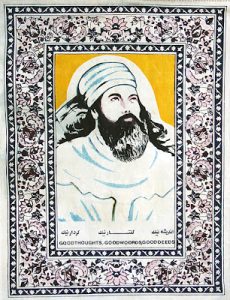 From monotheism to the resurrection of the dead, the dogmas of Zoroastrianism, the religion of the ancient Persians, are found in Christianity. Now, the Avesta, the holy book of Zoroastrianism, predates by several centuries the meeting of the Jews and the Persians, which took place in 539 BC, when the emperor Cyrus took Babylon, where the Jews had been deported. It must therefore be concluded that Old Testament Judaism inherited Zoroastrian dogmas after this date and transmitted them to Christianity.
Christians are well aware of what they owe to Old Testament Judaism, but they are completely unaware, with rare exceptions, that the latter, in turn, owed a considerable debt to Zoroastrianism which preceded it. Christianity therefore has Zoroastrian origins. Now, this strangely little-known truth is of interest not only to Christians themselves, but to all Westerners, Christian or not, since Western civilization is essentially Christian.
Concordance of dogmas
Zoroastrianism or Mazdaism was the religion of the ancient Iranians (Persians, Medes, Parthians), who formed with the Indians, or more precisely with the Indo-Aryans, the eastern branch, called Indo-Iranian, of the family of Indo-European peoples. It is still practiced by some 200 followers throughout the world, especially in Iran (Gebres or Zarthoshtis) and in India (called Parsis, that is to say Persians, because they descend from immigrants who came from Iran to flee persecution). This religion takes the first of its two names from its founder, the prophet Zoroaster, alias Zarathustra, the second of his God, Ahura Mazda. In the 1771th century, when Westerners discovered Zoroastrianism, the memory of which had been lost since the ancient Greeks and of which they themselves, moreover, had only a vague notion, and especially after the first translation of its holy book, the Avesta, in XNUMX, they were struck by the affinities it had with Christianity. The concordance of dogmas is indeed confusing.
Zoroastrianism believes in one God, Ahura Mazda, the Lord Wisdom, who is infinitely good and who created the world. He is surrounded by a procession of archangels, the benevolent immortals, ameshas spentas, and simple angels, yazatas. Ahura Mazda created the Holy Spirit, Spirit of Good, Spenta Manyu, and the Spirit of Evil, Angra Manyu, who freely chose, like Satan, to oppose God, and who is assisted by a host of demons, daevas.
Zoroastrianism is a religion of salvation. He believes in eternal life, in the judgment of the soul after death, in the retribution of good and bad thoughts, words and actions, in hell and paradise (word of Persian origin) – individual eschatology. He also believes in the Savior, Saushyant, who will return at the end of the world, in the resurrection of the dead, in the last judgment and in the coming of the Kingdom of God – collective eschatology.
We will note the same apparent incongruity as in Christianity, an incongruity which results from the superposition of the two eschatologies, the last judgment which takes place at the end of the world appearing to duplicate the particular judgment pronounced immediately after death.
(The problem had troubled Pope John XXII. It was up to his successor, Benedict XII, to provide a definitive solution, ex cathedra, in 1336, in the constitution Benedictus Deus. Cf. Gervais Dumeige, The Catholic Faith, p. 510-511.)
Zoroastrianism is a universalist religion, which is addressed to all men, and not to a particular people (although the survivors, guardians of the flame, tended to withdraw into themselves under the effect of persecution after the Muslim conquest).
English translation of Zoroastre et nous : Les origines zoroastriennes de l’Occident chrétien
More on Reseau International
by netage | General |
In God of the Fathers I explain that among God’s oldest appellatives in the Pentateuch/Old Testament (OT) is God sharing his power/might with his chosen individuals and of divine living presence; YHWH ‒ I Am. God shares his power with patriarchs, prophets and people he set apart/chosen to be with and with whom God has chosen to speak to.
 In The Son of God: The Scapegoat, I describe God’s appellative as Father/Abba implying Jesus’ closeness and intimate communication with the “living presence of God”. Father(s) is a term that also relates to Jesus’ faith that is rooted in OT’s ancestral tradition. In his ministry Jesus shares his presence among people with whom chose to be with and speak to. He uses his Word to foster love, inclusion, healing, compassion, gatherings and a following.
The Old Testament and New Testament (NT) have some fundamental distinctions that set them apart. The most notable is the language in which the narratives were written: The OT was written in Hebrew whereas the NT was written in koine, or common Greek used in the ancient world. Keep in mind that even though the NT was written in Greek, most of its authors were Jewish people familiar with OT scriptures.
Speech is a core principle of the Bible. God spoke his creation of the world in Genesis. He spoke to Adam and Eve, to Abraham and to all other Patriarchs that followed. And God spoke to Samuel and asked him to anoint David ‒ anointed and messiah are synonymous. As such David was chosen to become a great military leader and king of Israel.
In the OT anointing is performed by prophets and the priesthood following divine instructions. While Jesus, a common carpenter, was recognized as Messiah by Simon a mere fisherman, bypassing institutional tradition.
Matthew 16:15 “But what about you? He asked. “Who do you think I am?” Simon answered, “You are the Christ the Messiah, the Son of the living God.”
The most interesting part of Matthew’s quote above is the verse that follows ‒ keep in mind that Christό, is the Greek word for anointed one. Jesus called Simon a rock. A name that has been known in Christendom as Peter, or the Greek Petra meaning rock. In essence Jesus announces the metaphorical nature of his words and by extension his community~Church.
Matthew 16:17 Jesus replied, “Simon son of Jonah, you are a blessed man! Because it was no human agency that revealed this to you but my Father in heaven. So I now say to you: You are Peter and on this Rock I will build my community. And the gates of the underworld can never overpower it.
A metaphor is a shift in meaning and a break away from a normal use of words. It is an expansion of being that emphasizes the spiritual essence of what was at the outset an existing physical being/thing/reality. From now on Simon is no longer a mere disciple but a metaphorical leader representing an expansion in being of future following~community>Church.
Simon’s recognition of “the Messiah” is no longer related to the traditional institutions like the priesthood, or the material nature of the temple. Jesus inaugurates a metaphorical shift away from the literal to a metaphorical meaning that establishes a wholly other reality. It is also an expansion of God’s kingdom that embraces the world outside the limits of the Temple of Jerusalem and the role of its priesthood, expanding the administration of God’s divine plan to grassroots people.
The NT equates salvation of the people with the resurrection of the Body of Christ. Key to understanding Jesus’ message is underlined by the ambiguous distinction between the physical and spiritual/metaphysical meaning of the word body. Namely, body that means the physical anatomy of a human being and the word body that means a group of people, an assembly, hence in this context the Church.
Pope Pius XII in his Encyclical Letter, Mystici Corporis states that the Mystical Body of Christ is the Church. By Church he does not mean a material building or a physical temple, but an assembly of faithful living members of Resurrected Body of Christ.
An additional distinction between the OT and NT is the parameters that circumscribe God’s chosen people. In the OT they are delineated by the language of holy instructions, matrilineality and the promised land. The chosen people are commanded to abide by the strict application of the law/ten commandments and of pure versus impure moral codes, like circumcision.
Whereas in the NT, Greek is a departure from Hebrew. Salvation is outlined by one commandment of love that supersedes all OT scriptural instructions. In essence, if you love your neighbor as yourself you will not break any instructions and abide by all ten commandments. Hence, Jesus’ Kingdom of God transcends any cultural, ethnic, matrilineal lineage and linguistic difference.
One explanation for the use of Greek by NT writers is that Hellenism was dominant after the conquest of Alexander the Great. He made sure to popularize and expand the use of Greek and literacy throughout his empire. Whereas, reading and writing in Hebrew was a closely guarded knowledge kept by Jewish scribes and priests.
Jesus was a carpenter, Peter a fisherman. By all accounts, all of Jesus’ disciples were working class people representing a grassroots economy. Jesus and his disciples were born and lived outside Jerusalem. In contrast to the priesthood in the temple and the political power of the Roman procurator located in Jerusalem.
As Jesus’ mission moves him closer to the temple and challenges the priesthood, Jesus is arrested and then crucified. He was crucified outside Jerusalem on mount Golgotha but was buried in a tomb in the Church of the Holy Sepulcher in Jerusalem. His physical body vanished and three days later and the Resurrected Body of Christ appeared to his disciples outside the confines of Jerusalem.
The NT point to a shift away from the center, a departure and an expansion of a spiritual tradition in terms of the Hebrew to Greek and beyond. A shift away from the priesthood who administered the scriptures to Jesus and his disciples preaching the good news. And a shift away from the Temple and the political power of Jerusalem to spreading Jesus’ message to the outside world.
I am now getting to the most important aspect of a dynamic interaction between the physical/material and the spiritual/metaphorical. Each aspect is important and complementary as it generates a wholly other essence of God’s being. Wholly other implies that each reality is distinct and exclusive but at the same time it is inclusive and whole. Because both realities are an undeniable dynamic part of the whole essence and presence of the Living God.
More on the concept of the Wholly Other:
Book of Job: A Vision of God
by netage | Culture, Ideology and Religion, General |
El, Elohim
One of the oldest Semitic appellatives of God is ‘el.1 The designation has been widely used in ancient Israel and Babylonia. It is also found in the oldest names as a component of: Ishma-el, Bethu-ell., and Isra-el. 2 The original meaning of the word ‘el is still uncertain, but a probable origin may stem from the root ‘lh, which conveys the sense of “to be strong and powerful”, “direction”, or even “a sphere of control”. We also find the root alongside the proper name of deities such as: El-Shaddai (God Almighty), El-Elyon (God Most High), and El-Roi (“El sees me”, “God Seeing”).3
Among the most appropriate epithets of El are “Mighty”, “Leader”, or “Governor”. Its most forceful significance was meant to stress an attribute of majesty, with the intent to inspire fear in the face of God’s “mighty” presence.
Another important feature in the Scriptures is the frequent use of the appellative El in connection with the patriarchs’ names. The “God of Abraham” for instance, is the “El of Abraham”, the “Fear of Isaac” is the “El of Isaac”, and the “Mighty One of Jacob” is the “El of Jacob”. The designation was also used to describe the “God of the fathers”; i.e. the “El of the Fathers”.4 This feature indicates a special relation between the deity and the individual leader. The God of the leader became, henceforth, the God of the family and of the tribe. As such it also established a tribal bond between the God and the group.
Gen. 33:18 And Jacob came safely to the city of Shechem, which is the land of Canaan, on his way from Paddanaram; and he camped before the city. And from the sons of Hamor, Shechem’s father, he bought for a hundred pieces of money the piece of land on which he had pitched his tent. There he erected an altar and called it El-Elo’he-Israel (that is God, the God of Israel).
Several divinities of the ancient Near East in the second millennium BCE were for the most part assigned to a specific cultic place. The more stable kingdoms living during that period were constantly threatened by wandering nomadic tribes. War was an ongoing reality, especially among the emerging powers seeking to expand their dominion. The survival of the smaller semi-nomadic tribes depended on the initiative of their leader.
The pervasive use of magic in connection to their tribal gods was common as a way to inspire confidence, strength, and protection against rival enemies. The religious life of the group was closely intertwined into the nuclear social structure. Herdsmen, clans, and tribes, most of them semi-nomadic, were constantly in search of new ways to provide for their own subsistence and that of their flock in a harsh environment. The best fertile lands were already occupied by the powerful rulers of the city-states.5
The text of Genesis reveals that the worship of El among the early Hebrew migrant tribes had the same specific function of social cohesion and protection. Consequently, the random contact with other tribes and cultures brought about spontaneous opposition to rival cultic deities which endangered the integrity and cohesion of the group. This is especially the case of El and its opposition to Baal, the warrior storm-god, the King of the Gods.6
Another word commonly used for God in the Old Testament is ‘elohim.7 Etymologically it is connected to El. It is used mostly as an “abstract plural” or a “plural of intensity”. Elohim can best be translated into the Godhead. It is mostly used as a superlative to elevate the rank of the divinity above the pantheon of the other gods. This expression was utilized primarily in Babylonia and in pre-Israelite times to express the unity of individual gods that combined the totality of the higher divine reality. The plural form became recognized as an expression of superiority. In that sense, the narrative uses the plural form of ‘elohim to glorify the God of Sinai as the supreme divinity, and to express the superiority of ‘elohim to other gods.
The name Elohim is also an appellation for God which is used to replace the name Yahweh. Among other epithets used in the Bible to replace the unspeakable name of God ~YHWH~ is Adonai, or the Lord.
Yahweh
 El, in all likelihood, is linked etymologically to ilu, a widely popular high-god of ancient Mesopotamia and the most prominent deity in the Canaanite religion. El, which we have identified with the God worshiped by the fathers, was also a prevalent God in Canaan, what was commonly known as Palestine.8
Ex: 6.2 And God said to Moses, “I am the lord. I appeared to Abraham, to Isaac, and to Jacob, as God Almighty, but by my name the lord I did not make myself known to them. I also established my covenant with them, to give them the land of Canaan, the land in which they dwelt as sojourners.”
P, who wrote the quote above, makes it quite clear that the identity of the gods worshiped by the forefathers are not to be mistaken with Yahweh, who disclosed himself to Moses for the first time. In the text, Yahweh informs Moses that he was known by the forefathers as El Shaddai; i.e., the God Almighty. The account also reveals the whole new reality of Yahweh who links the promise he made to Abraham, Isaac, and Jacob, and finally to Moses.
Yahweh’s promise links his presence to the enduring existence of his people’s posterity; ie, the descendants. A promise which is revived again and again through the kings and prophets in whom Yahweh chooses to inspire his authority.
Ex. 3:14 God said to Moses, “I am who I am”. And he said, “Say this to the people of Israel, `I am has sent me to you.'”
In the quote above J links God’s name with the verb “to be”, or “to exist”.
Ehyeh-asher-ehyeh 9
I am who I am
The significance of the tautology ehyeh-asher-ehyeh, with the emphasis on the redundancy of the verb ehyeh, “to be”, is meant to enforce the idea of vitality and presence. The context in which God speaks, and to whom he speaks, implies an apperception of the divine presence which is linked with the promise made by God to the forefathers.10
The essence of the being of God is portrayed in terms of presence and of relationship. All the attributes are closely related to the twofold relationship between Yahweh and Moses and the realization of the promise to free the people from Egypt.11 The closeness is explained when God says to Moses, “But I will be with you”.12
When God tells Moses to go to the people and tell them that “I am has sent me to you”, he implies that when the hero utters the words “I am”, Moses will assume and ultimately embody God’s divine authority. Yahweh’s personal presence and existence is, shall we say, determined by Moses’ acquiescence of his mission. Yet it is the ongoing quality of the promise that is eternal, not God’s spokesmen. As such, the promise transcends Moses’ historicity.
Individuality is also stressed by the pronoun “I” which can only exist in the act of speaking to others or to oneself.13 Yet the first person singular indicates the presence of the image-less individuum vaguum. In the narrative the “I” exists or stands out as an individual being since God’s words are audible and comprehensible to the hero even though God’s reality is image-less. As God introduces himself, a distance is set between Yahweh and Moses. The alienation stems from the mystery of the distant promise that God had made to the forefathers. But as soon as Moses realizes the scope of his destiny, the hero finally understands the message and goal of the revelation. Then, the separation narrows. As Moses accepts God’s mission, he eventually identifies with the promise. More so when Yahweh reassures Moses that he will be with him and that his mouth will be God’s mouth. At the outset, Yahweh is an wholly other alterity to Moses yet he becomes one with God and wholly other entirety with the acceptance of his mission and the covenant.
Although God forbids the use of any graven images to portray or to identify him, the text is full of metaphors to suggest that his identity is accessible to us:
Ex. 33:11 “Thus the lord used to speak to Moses face to face, as a man speaks to his friend”.
God here is depicted as a friend, and the intimacy of the relationship is further symbolized by its anthropomorphic and metaphorical nature.
Throughout the Bible, the narrative uses the anthropomorphic to reveal God.
Gen. 1:3 > God speaks
Gen. 1:26 > God created man in his image
Gen. 3:8 > God walks in the garden
Gen. 32:24 > God wrestles with Jacob
Exod. 15:8 > God has a nose
Deut. 11:12 > God has eyes
1 Sam. 8:21 > God has ears
Ps. 2:4 > God laughs
Isa. 42:14 > God pants and groans
We have seen in Genesis how God speaks to the world. He speaks to his prophets, to his people and to the reader/hearer. This ability to communicate is essential in order for his will to be known and God’s existence to be propagated by reading or hearing His Word.
God was present in the beginning. He was present with Abraham, Jacob, Isaac, and Moses. God is always present in his promise and his word. Therefore, God transcends any personal relationship to encompass the people and their progeny he IS always present among the living.
______________________
1 The term Semitic is used here to represent the family of languages of which Hebrew, Aramaic, Ethiopic and ancient Assyrian are a part.
2 Ilumma-ila and Ibni-ilu, in Babylonia; IlL-awwas and Jasma`-ilu in Southern Arabia.
3 El-Shaddai (Gen. 17:1); El-Elyon (Gen. 14:18f); and El-Roi (Gen. 22:14).
4 El of Abraham (Gen. 31:53); El of Isaac (Gen. 31:42); El of Jacob (Gen. 49:24).
5 See Max Weber, Ancient Judaism, New York, The Free Press, 1952.
6 See M. Weber, Ibid., 154. Also Walther Eichrodt, Theology of the Old Testament, London, SCM Press, 1969, 180, Gerhard von Rad, Old Testament Theology, London, Oliver and Boyd, 1965, and Edmond Jacob, Old testament Theology, New York, Harper and Brothers, 1955, 56.
7 Gen.1: 26; 20:13; etc.
8 Ronald E. Clements, The God of Israel, Atlanta, John Knox Press, 1979, 64.
9 Torah, Philadelphia, The Jewish Publication Society of America, 1982, Ex. 3:14.
10 One interesting hypothesis on the origin of YHWH -called the tetragrammaton- relates to an extension of the prehistoric word hu rendered “He”, the god. Another similarity points to the Dervish cry Ya-hu which can be translated into “O He”. The original expression may have been Ya-huva, if the Arabic pronoun huwa is taken to mean “he”. It is possible that the name Ya-huva could have meant “O-He” also. Such an expression could easily have evolved into Yahu and finally Yahweh. It is also interesting to note the rhetorical character in the original use of the word. M. Buber, Moses, Oxford, Phaidon Press Ltd, 49f.
11 See Martin Buber, Moses, Oxford, Phaidon Press Ltd, 192-195.
12 Ex. 3:12.
13 See Ivan Illich and Barry Sanders’, ABC: The Alphabetization of the Popular Mind, San Francisco, North Point Press, 1988, 70f.
by netage | Culture, Ideology and Religion, General |
February 4th marks the anniversary of the birth of Dietrich Bonhoeffer (1906-1945): A remarkable German theologian. Bonhoeffer was involved in several clandestine missions to help Jewish people escape Nazi Germany. He also participated in failed plots to overthrow and assassinate the Fuhrer. His unpatriotic actions led him to the gallows. He was executed on April 9th 1945. A few weeks before Hitler committed suicide and the end of the war.
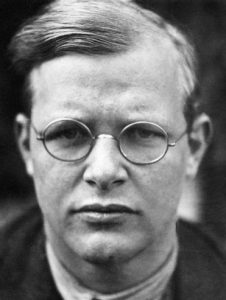 Bonhoeffer took part in a little known resistance movement against Hitler. He had been a spy and was determined to publicize to the world the existence of Nazi concentration camps and Hitler’s treatment of the Jews. Bonhoeffer’s had also worked with contacts in England, particularly Bishop George Bell. He had hoped that the British government would show support for the resistance of which he was a part. He also tried to convince his British contacts to participate in a military coup against Hitler. History reveals that due to their distrust of him and the Germans, England’s help never materialized.
What made Bonhoeffer exceptional is that he could have taken a cushy job teaching at good University or become a minister in an affluent parish. He could have blended in with the crowd like most of his countrymen and ignore Hitler’s folly. He could have stayed in the US after his latest visit instead of returning home. However, he could not leave his family and friends behind, or abandon his country at a crucial time.
He came from a good and affluent family. His father was a well respected professor of psychiatry and neurology. His mother had obtained a university degree. A rare feat for the time. She undertook to educate her children at home and explaining that: “Germans have their backbones broken twice in life: first in schools, then in the military”.
Bonhoeffer was torn between his passion for the Word of God and the love for his country. The German Church of the time was split between the emotional grips of patriotism and the commands of the Gospels. What made Bonhoeffer stand out from all other theologians of his era was his commitment to Christ. And to this day he remains an example of what it means to be an authentic “disciple” of Jesus Christ.
Like Jesus he stood up for the outcast. He was opposed to Antisemitism and expressed his views publicly against the racial policies of the Nazis. He stood against the predominant views of appeasement by the so-called Christian Church of his country. The Gestapo eventually caught up with him and forbid him to teach or preach. Before he finally was imprisoned he spent two years secretly teaching and supervising his students illegally in small parishes. He was arrested in April 1943. And until his death he remained a man of faith and stood steadfast against the delusion of tyranny and misplaced nationalism.
Germany was divided between a predominant German Evangelical Church and a religious right faction called the Deutsche Christen ─German Christians. The German Evangelical Church had a strong nationalist tradition and had a history of being subservient to state authority. Whereas, the German Christians became the more predominant voice of Nazi ideology. They even advocated the removal of the Old Testament from the Bible. With their help, Antisemitism became widespread and enthusiasm for Nazism took over Germany.
To this day many questions remain unanswered. How could a majority of Christians living in Germany not stand up to Hitler? How could they condone his racial policies? And how could they overlook the illegal invasion of other countries, justify hatred and war? The answer might lie in the art of casuistry!
Casuistry is the theological discourse that deals in resolving special moral cases of conscience especially in regards to matters of conflicting duty or responsibility. Mostly it appears in the form of sophistry: A justification of an act that is morally wrong making it appear to be morally right. For instance, the Church was able to morally justify acts violence during the Inquisition, contradicting the messages in the Gospels. It did this by diverting the issue away from the killing of innocent victims by demonizing them. The Nazi did the same thing with the Jewish people. Making them the victims and scapegoats of unresolved conflicts within their own German economy.
Bonhoeffer’s preoccupations were confronted by both theological and political issues. The racism of his country had finally convinced him that the religious traditions of his time were spiritually bankrupt. Disillusioned about his Christian contemporaries he described them as living a “religionless Christianity”. Where moral values were being replaced by cynicism and ideology. He realized that tribalism and nationalism had overtaken religion and the universal principles of true spirituality. He lived first hand the consequences of a religionless Christianity by his persecution, incarceration and execution.
In the face of his moral turmoil, Bonhoeffer’s book The Cost of Discipleship literally lays out his Christian position: To stand up morally against the tyranny of war, racism and hatred. Such a moral stand however has a cost. And since he was a man of his and God’s Word, he paid the price with the sacrifice of his life.
Most of all, Dietrich Bonhoeffer is among a few in history of Christianity who deserves to be called a Christian. To this day I cherish his memory, his moral example and character. He will remain an indisputable model of what is to be a “Christian”, especially amidst times of ethical decay, lawlessness and political tyranny.
by netage | General |
By Bert Olivier, Brownstone Institute

The Tower of Babel
The term, ‘conspiracy theory’ became part of common parlance during the ‘Covid era,’ but although all of us know what it refers to – and who are supposed to be the ‘conspiracy theorists’ in question, namely those people who saw through the ‘pandemic’ scam and everything it entailed – the precise nature of the ‘conspiracy’ is probably less clear. When I ask individuals what they understand by it, they usually answer in more or less vague terms. So what is it?
In his book, HAARP: The Ultimate Weapon of the Conspiracy (2003) – followed in 2006 by Weather Warfare – Jerry Smith indicates the importance he attributes to the concept by capitalising it throughout. Smith relates it to what he regards as a weapon for warfare; to wit, the ‘High-frequency Active Auroral Research Program (HAARP),’ and uncovers what the powers behind this project would have preferred to remain undisclosed, for obvious reasons, once one is apprised of the reasons for its establishment by the ‘Conspiracy.’ Here I do not wish to delve into the specifics of HAARP, but merely focus on Smith’s illuminating insights as far as the ‘Conspiracy’ is concerned. His answer to the question about its ‘what?’ is scattered throughout the first of the two books mentioned earlier. Here are some excerpts (Smith, 2003, p. 22-24):
Some people believe that there is one over-arching conspiracy, a cadre of incredibly powerful people who want to rule the world. Most of us dismiss such people as paranoid kooks. Still, there is no denying that for over a hundred years a movement has been developing among the world’s top intellectuals, industrialists and ‘global villagers’ to end war and solve societal problems (like overpopulation, trade imbalances and environmental degradation) through the creation of a single world government. Whether this globalist movement is a diabolic ‘conspiracy’ of the evil few or a broad ‘consensus’ of the well-intentioned many, in fact matters little. It is as real as AIDS and potentially just as deadly, at least to our individual freedom, if not our very lives…
Technocracy, Fear-Mongers, and the Conspiracy