
We’re at the 10th installment of Superman movies. Keep in mind that the 7th version was entitled Batman vs Superman: Dawn of Justice. In it Superman shares the screen with another superhero to revive his decreasing popularity. As it happens, Batman movies have superior box office success. In the most recent movie, Superman is helped by a cast of supporting superheroes including a dog named Krypto, presumably to improve ratings and revenues.
The new Superman movie has some notable novelties. Lois Lane is surprised she can actually interview Superman, shown wearing pants and a shirt, instead of his costume. The change puts an end to the secretive dual personality with more focus on the character played by Clark Kent, a humble Journalist.
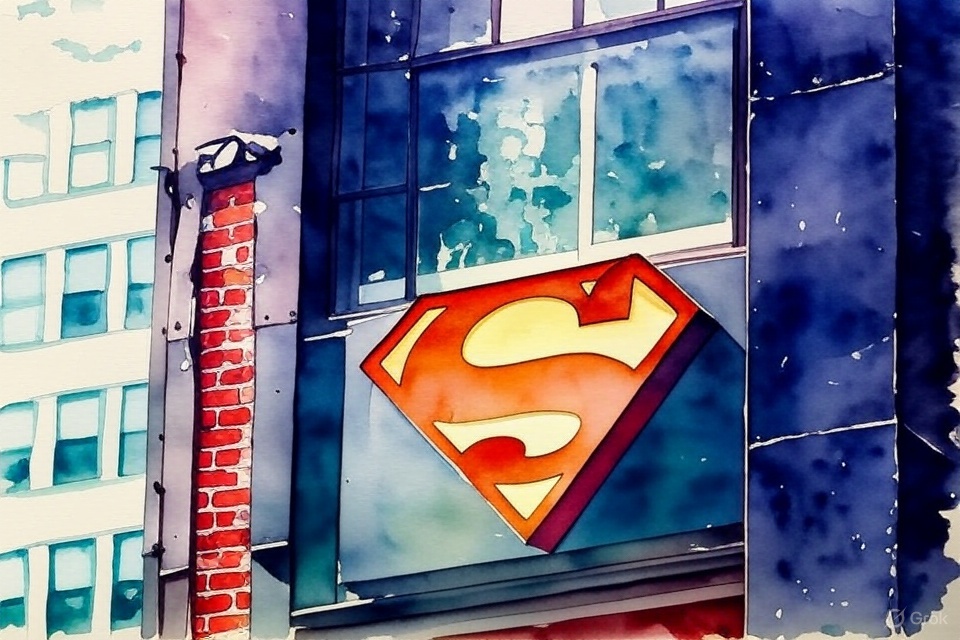
In this movie, Superman is more down to earth, so to speak. He candidly shows his human side to his loved ones. One scene shows his adopted father who tells him “Your choices. Your actions. Makes you who you are.”. Nonetheless, Superman is facing public hostility for trying to stop a war. Puzzled, Lois asks him why he got involved? He passionately replies, “People were going to die” if he didn’t.
Screenwriting about saving lives is a display of good intention. However, it does not stop the film being a show of gratuitous destruction and killing. This is the dual nature of action movie business. One side of the picture shows righteous moral justification, while the other, the visual special effects side, depict massive destruction beneficial for box office revenues.
Readers familiar with my writings know that in order for a hero to appear and stand out, a villain must emerge in a story. This dynamic is true for most mythologies and science fiction stories. In the movie the villain that fires up Superman’s powers is a longtime adversary named Lex Luthor.
Lex Luthor is a billionaire industrialist who is Metropolis’ most powerful person. His quest to destroy Superman is sparked by some envy of his supernatural powers that make him a beloved hero of the people. Powers that are a challenge to Lex Luthor’s authority and total control of Metropolis.
Moreover, Superman uses his powers for the good of the people. He is a selfless vigilante, the opposite of power provided by money. While Lex Luthor’s identity is solely based on his billions that provide him with an army equipped with high-tech weapons. His identity is defined by what he owns and controls. Without his money, he is irrelevant.
Ironically, Lex Luthor may have a point about Superman’s identity when he describes him in these terms; “He’s not a man. He’s a it”. What does Lex imply by “it.”? That Superman’s existence is merely based on a thing ‒a motion picture thing.
One trailer describes Superman as “the most powerful being on planet earth.” The statement is to say the least, advertising make-believe. A more apt description is, the most popular character in the world to a captive movie audience. Superman is a symbolic front-man of the most powerful medium on the planet. A medium known as the movie industry, namely the producers, the screenwriters, the actors, the music/soundtrack, the special effects team and the varied media and apps, to distribute the video to the whole planet.
There is another important departure from the original Superman story. The hero’s motto changed from “Truth, Justice, and the American Way” to “Truth, Justice, and the Human Way.” In other words, Superman no longer represents a country built by its immigrants. Symbolized by a hero who embodies the technological, industrial power and military might made by the US during the twentieth century.
The new motto is a shift in Superman’s identity away from its American origin. It promotes a new “way” that represents a global enterprise. Created by a corporate body born of a legal construct defined as an artificial person. And here is where lies the imposture: Although a corporation is made up of individual investors each shareholder abdicates their human soul by submitting to a corporate charter of profit making.
Another pretense is the claim that it is a global~universal enterprise because individual shareholders are located all over the planet, transcending national borders. As such, it is a super-national entity that supersedes any democratically elected sovereign state. Yet the ultimate imposture is to make us believe it is the legal heir of human civilization.


